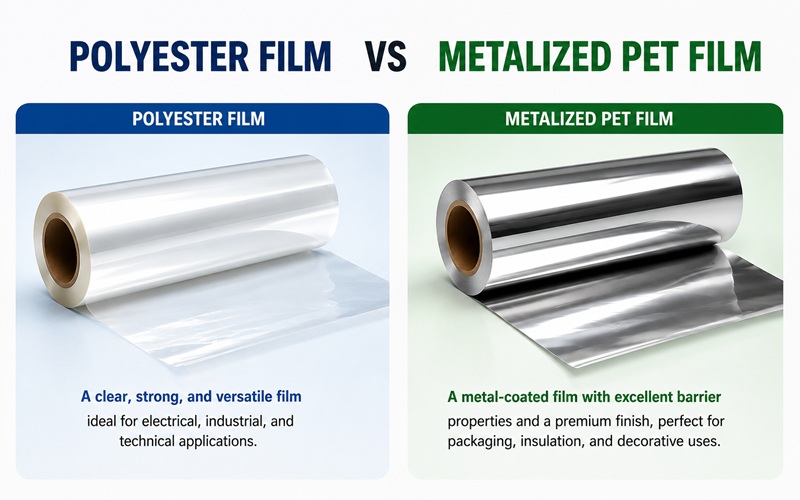
Flexible films shape modern packaging and industries. Moreover, they support durability and product protection. Manufacturers rely on these films more than any other solution. Polyester Film offers strength and outstanding performance. In addition, it suits electrical and packaging uses. Meanwhile, metalized pet film adds strong barrier protection. It also gives a reflective, premium appearance. Demand for both films grows across sectors. Industries seek better efficiency and longer shelf life. However, choosing the right film remains challenging.
Buyers compare performance and cost very carefully. Consequently, understanding key differences becomes very important. This comparison guides smarter and clearer decisions. Ultimately, the right choice improves quality and reliability.
What is Polyester Film?
Polyester Film is a versatile material. It stays stable under high temperatures. Moreover, it offers clear transparency and smooth surfaces. These qualities ensure reliable performance. Manufacturers across industries use it in packaging and electrical insulation. It also supports printing and lamination applications effectively.
Meanwhile, consistent quality depends on production precision. Polyester film manufacturers ensure uniform thickness and strength. They also improve surface treatment and coating methods. However, innovation continues to refine performance standards. Consequently, industries trust this film for critical uses. Ultimately, it delivers a balance between performance and cost.
What is Metalized PET Film?
Metalized PET film is a coated polyester material. It includes a thin metallic surface layer. Moreover, it enhances barrier protection against moisture. It also blocks light and oxygen effectively. In addition, the surface appears shiny and reflective. This improves visual appeal in packaging designs. Furthermore, it supports a longer product shelf life.
The film also maintains strength and flexibility. Manufacturers use it in food packaging widely. It also serves insulation and decorative purposes. Meanwhile, brands prefer it for extended shelf life. Demand for metalized pet film grows steadily. However, quality depends on coating precision and consistency.
Key Differences at a Glance
-
Polyester Film has a plain, uncoated surface
-
Metalized PET film includes a thin metallic coating
-
Coating enhances durability and surface functionality
-
Structure directly influences overall material performance
-
Polyester Film offers limited barrier protection
-
Metalized PET film blocks moisture and oxygen
-
It also prevents light penetration effectively
-
Polyester Film remains clear and transparent visually
-
Metalized PET film shows shiny, reflective finish
-
Appearance impacts branding and product presentation
-
Polyester Film suits electrical and industrial uses
-
Metalized PET film dominates food packaging applications
-
Polyester Film offers a lower initial cost advantage
-
Metalized PET film improves long-term efficiency.
How to Select the Most Suitable Film
The right decision depends on application's needs. Moreover, industries require different performance and durability levels. Packaging needs a strong barrier and visual appeal. Meanwhile, industrial uses demand strength and thermal stability. Polyester Film suits electrical and technical applications well.
Also read: What Makes Indian Polyester Film Manufacturers Competitive Globally
In addition, metalized films serve packaging and protection roles. However, cost and efficiency must guide final decisions. Consequently, buyers should compare durability and long-term value. Selecting trusted polyester film manufacturers ensures consistent quality.
They also support innovation and customized solutions. Moreover, sustainability factors guide material choices today. In addition, eco-friendly options gain strong attention. In contrast, cost pressures still influence material selection decisions. However, balancing cost and performance remains essential. Consequently, businesses carefully evaluate long-term value. Ultimately, the right film improves performance and product reliability.
Future Trends in Film Technology
Film technology now moves towards sustainable materials. Moreover, manufacturers explore eco-friendly production methods. Recycling and reuse gain strong industry attention. In addition, demand for biodegradable films increases steadily. Meanwhile, coating technologies significantly improve barrier performance.
Advanced layers block moisture and oxygen better. However, innovation also focuses on reducing material thickness. Consequently, films become lighter without losing strength. Polyester Film continues evolving with enhanced properties. It supports both industrial and packaging advancements.
Furthermore, metalized films gain improved efficiency and durability. As a result, applications expand across multiple sectors. Ultimately, future films will balance performance and sustainability.
Concluding Remarks
Both films serve different purposes across industries. Moreover, each offers distinct strengths and limitations. Polyester Film provides clarity and structural stability. Meanwhile, metalized pet film ensures strong barrier protection. In addition, applications decide which material performs better. Packaging needs differ from industrial usage requirements. However, selecting the wrong film affects performance outcomes.
Consequently, careful evaluation becomes essential for buyers. Working with reliable suppliers ensures consistent material quality. Trusted partners also support customization and innovation needs.