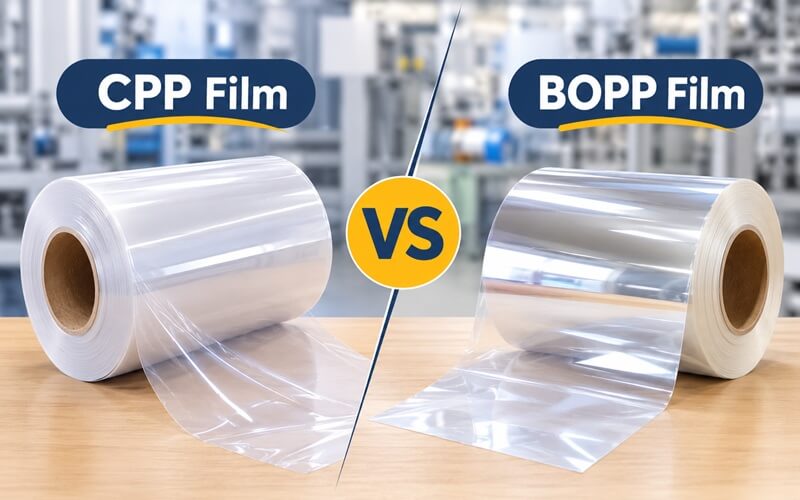
Film selection rarely gets a meeting of its own. On most purchase orders, the film is a single line. It gets filled in between other jobs and is rarely looked at again. Then a seal fails, or the film starts acting up on the machine. Some films stay soft and seal easily. Others are stiffer and give cleaner print. Which one is written on that line matters more than it seems. That is why the CPP Film vs BOPP Film question deserves more attention than it usually gets. Mistakes tend to be noticed only after production has started.
Why The Right Film Choice Matters
Packaging film is hardly ever noticed by the end consumers who buy a product. Even so, the protection of a product and the presentation of a brand are decided largely by it. First of all, the film is expected to run smoothly on machines. It must seal properly. It must also support clear printing. When these needs are not matched correctly, the problems are usually found late. Wastage and rejected batches may follow. That is why these two films should be compared carefully before a purchase order is raised. A little homework at the start is generally less costly than a failed production run. Packaging teams are always pulled between cost and performance. The choice gets simpler once the basic nature of each material is known well.
What Is CPP Film?
CPP or cast polypropylene, is formed by melting and spreading polypropylene quickly. Since it is not stretched at any point afterwards, the film remains soft and flexible. It also seals well, which is why CPP Film is commonly used as the inner layer of laminated packs. JPFL Films Private Limited makes it in three main types. The transparent type is used for plain printing and lamination, or as a base for metallizing. The solid white type is heat sealable on both sides and can be printed directly without a white ink layer. The metallized type carries a thin aluminium layer on one side for barrier protection, while the other side stays heat sealable. A high barrier version is also made for packs such as chips and bakery items.
Introducing BOPP Film
Biaxially oriented polypropylene means the film is stretched in two directions whilst it is still warm. This is the reason it is so glossy, clear and stiff. The thickness is given as a measurement in microns (a tiny part of a millimetre) and BOPP Film comes in either heat sealable (it seals when you make it hot and apply pressure) or non-heat sealable. Packs that need a seal are made with the first kind. The second is used for printing, lamination, labels, tape and other pack types. The matte BOPP is used for book covers and posters. The pearl white is used for ice-cream and sweetie packs.
Key Differences Between CPP & BOPP At A Glance
Hold a strip of each in your hands and the gap is obvious. CPP is soft and gives way under the fingers. BOPP snaps back and lies flat. That comes down to how they are made. CPP is cooled after casting and never pulled. BOPP is pulled hard in two directions before it is wound. The softer film is the one trusted with sealing, so it usually ends up inside the pack. BOPP faces outward. It carries the print, and the high gloss helps there. Some BOPP grades do seal, but only the ones sold for that job. Grade and thickness can shift all of this, so the data sheet should have the final say. None of this makes one film better overall. Each simply does a different job well.
Common Applications
In the same pack, BOPP and CPP often work side by side, but each has jobs of its own. A pearl white BOPP grade suits high speed confectionery wrapping and ice cream packs. Antifog transparent grades are used for fresh fruit and vegetable packs. Clear grades are chosen for labels, wrap around labels, adhesive tape and book covers, and overwrap for boxes and cables is another common use. CPP can be found on the inner side of laminated inventory packs, where sealing is needed. Metallized CPP carries a very thin layer of aluminium on one side and is picked when barrier protection matters. A high barrier version is made for chips and bakery items. These examples are only a starting guide. The final pack structure should always be confirmed through testing with the actual product and machine.
How To Choose Between The CPP & BOPP
The following are a few practical questions that can guide the decision.
-
What is being packed? Dry snacks and sweets have different needs from products that are heated after packing.
-
How will the pack be closed? If a sealing layer is required, then CPP is often considered.
-
How important is print appearance? A clear glossy outer layer usually points towards BOPP.
-
Will the pack be retorted? Specialty grades should be discussed directly with the supplier.
-
What does the machine need? Stiffness and thickness affect how a film runs on the line.
-
Is a laminate planned? Many structures use both films together.
Samples and trial runs should be arranged before any bulk order is placed. Technical data sheets should also be requested and compared carefully.
Final Thoughts
There is no single winner in the CPP Film vs BOPP Film comparison. Each film suits different jobs and both are often used together in one pack. The right choice depends on the product, the machine and the look required. Buyers who need help with grades can submit a product enquiry through the JPFL Films Private Limited website
.